The best way to get rid of an old appliance depends on its condition and type, but in most cases you have five options: municipal bulk pickup, retailer haul-away when buying a replacement, scrap metal recycling for cash, donation if it still works, or a dumpster/junk removal service for damaged units. Refrigerators, freezers, and air conditioners require special handling because of refrigerants (Freon), which are regulated by the EPA and cannot legally be vented into the air—these units should go through a certified recycler or retailer take-back program, not a standard dumpster.
Working appliances are best donated or sold; broken ones are best recycled for scrap value or picked up by your city’s bulk waste program. Getting rid of appliances the wrong way can mean fines, environmental damage, or leaving cash on the table. Below is a full breakdown of every disposal method, what they cost, and which is right for your specific appliance.
Understand What You’re Disposing Of First
Appliances generally fall into two disposal categories:
- Refrigerant-containing appliances — refrigerators, freezers, window and central air conditioners, dehumidifiers, and some wine coolers. These require EPA-compliant refrigerant recovery before scrapping per Section 608 of the Clean Air Act.
- Non-refrigerant appliances — washers, dryers, dishwashers, stoves/ranges, microwaves, water heaters. These are generally easier to recycle or scrap since they don’t need refrigerant removal, though gas appliances should have fuel lines disconnected safely.

Disposal Method Comparison
1. Municipal Bulk Pickup
Most cities offer scheduled bulk trash pickup for large items, including appliances, often a few times a year or by request.
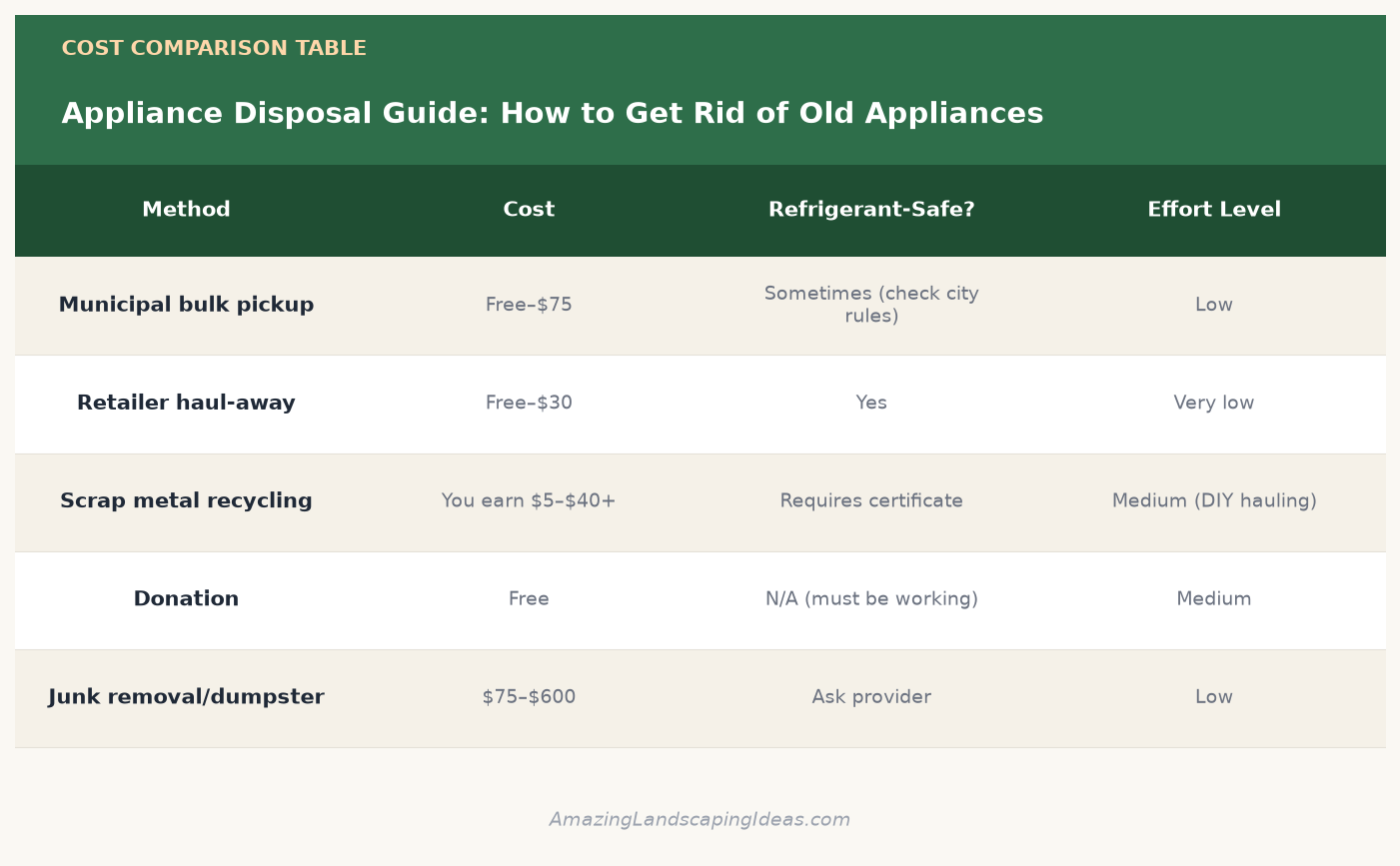
- Cost: Usually free to $30–$75 per item; varies widely by city
- Best for: Any appliance, especially non-working ones
- Watch out for: Many municipalities require refrigerant appliances to be tagged or pre-scheduled separately—check your city’s sanitation website before curbside placement
2. Retailer Haul-Away
When you buy a new appliance from a big-box retailer or local appliance store, many offer free or low-cost haul-away of your old unit.
- Cost: Often free with delivery purchase; sometimes $15–$30 as an add-on
- Best for: Anyone already replacing an appliance
- Pros: Zero extra effort, appliance is removed the same day as installation, retailer handles EPA-compliant refrigerant recovery
- Cons: Only available with a new purchase; not all retailers service all appliance types
3. Scrap Metal Recycling
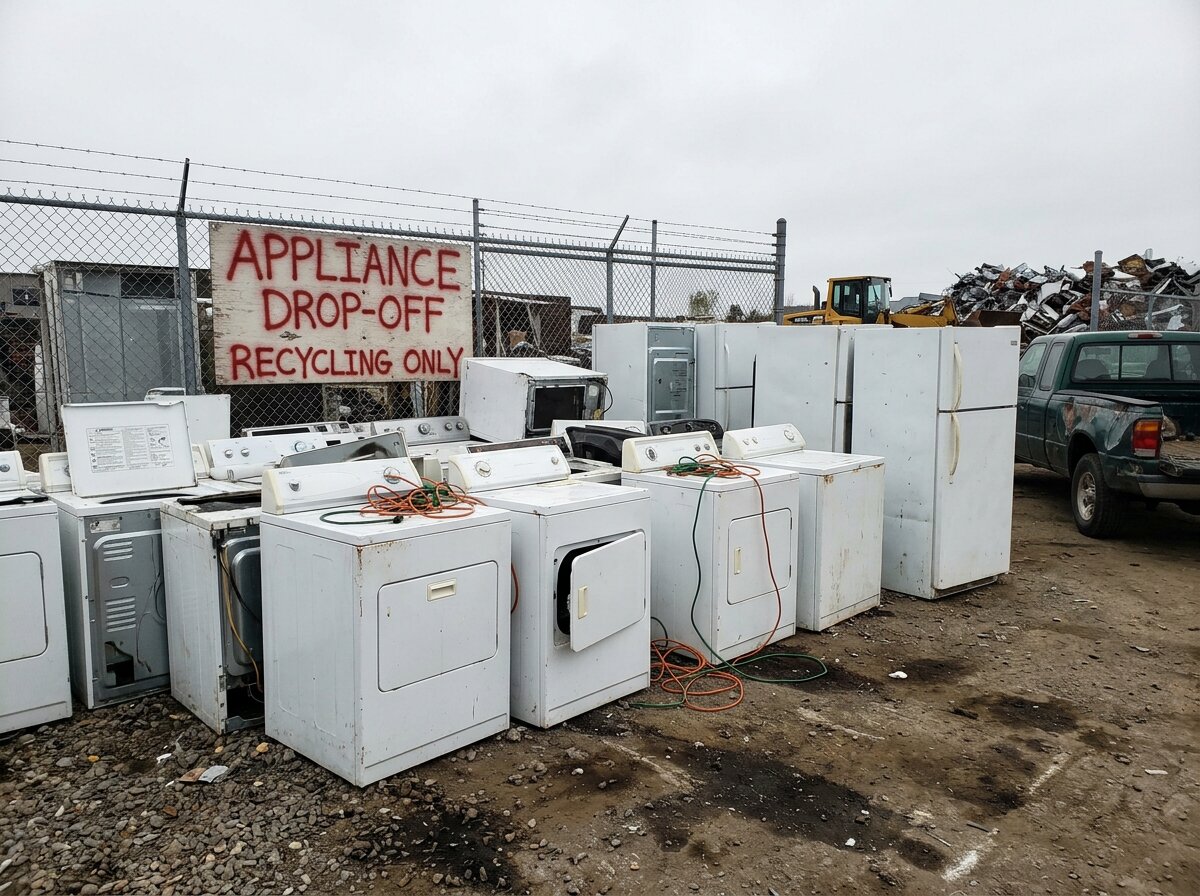
Appliances contain significant recyclable steel, copper, and aluminum. Scrap yards will often pay for old appliances, especially washers, dryers, and stoves.
- Cost: You get paid—typically $5–$25 for small appliances, $10–$40 for washers/dryers, more for units with copper wiring or motors
- Best for: DIYers willing to haul the unit themselves
- DIY tip: Removing the motor, compressor, and any copper wiring beforehand can increase your payout at some yards, though many scrap yards will do this breakdown themselves
- Refrigerant note: Reputable scrap yards will require proof of refrigerant recovery (an EPA disposal certificate) before accepting refrigerators, freezers, or ACs
4. Donation
If the appliance still works and is reasonably clean and modern, donation is the most sustainable option.
- Cost: Free and may be tax-deductible
- Best for: Working appliances less than 10 years old
- Where to donate: Habitat for Humanity ReStore, Goodwill (select locations), local charities, or listing free on Facebook Marketplace/Craigslist
- Note: Most donation centers will not accept appliances more than 10–15 years old due to energy inefficiency and reliability concerns
5. Junk Removal / Dumpster Service
For homeowners disposing of multiple appliances at once (like during a renovation), a junk removal service or dumpster rental is efficient.
- Cost: $75–$200 per appliance for junk removal services; $300–$600 for a dumpster rental (multiple items)
- Best for: Renovations, estate cleanouts, multiple appliances at once
- Important: Appliances with refrigerants generally cannot be placed directly in a rented dumpster in most jurisdictions without prior refrigerant recovery—ask your dumpster provider about their policy
Cost Comparison Table
Preparing an Appliance for Disposal
Whichever method you choose, proper prep matters:
- Disconnect power, water, and gas lines. Unplug electric units; shut off and disconnect water lines on washers, dishwashers, and ice-makers; have a professional disconnect gas ranges or dryers if you’re not confident doing so yourself.
- Remove food and clean interior surfaces of refrigerators and freezers to prevent odor and pest issues while awaiting pickup.
- Tape or remove doors on refrigerators/freezers if left curbside—this is a legal safety requirement in many areas to prevent entrapment accidents, especially with children.
- Drain remaining water from washing machines, dishwashers, and water heaters before moving.
- Locate the EPA refrigerant label (usually on the back or inside a refrigerator/freezer) so a recycler can confirm the refrigerant type quickly.
Environmental Regulations to Know
- EPA Section 608 (Clean Air Act): Prohibits knowingly venting refrigerants into the atmosphere. Certified technicians must recover refrigerant from any appliance before it’s crushed, shredded, or landfilled.
- State e-waste laws: Many states also regulate disposal of appliances with circuit boards (smart refrigerators, connected washers) similarly to electronics.
- Local landfill bans: A growing number of municipalities ban whole appliances from landfills entirely, requiring recycling or scrap processing instead.
Failing to properly recover refrigerant before disposal isn’t just an environmental issue—it can result in EPA fines for individuals or businesses that knowingly violate the rule, so always use a certified recycler for AC units, refrigerators, and freezers.
DIY vs. Hiring It Out
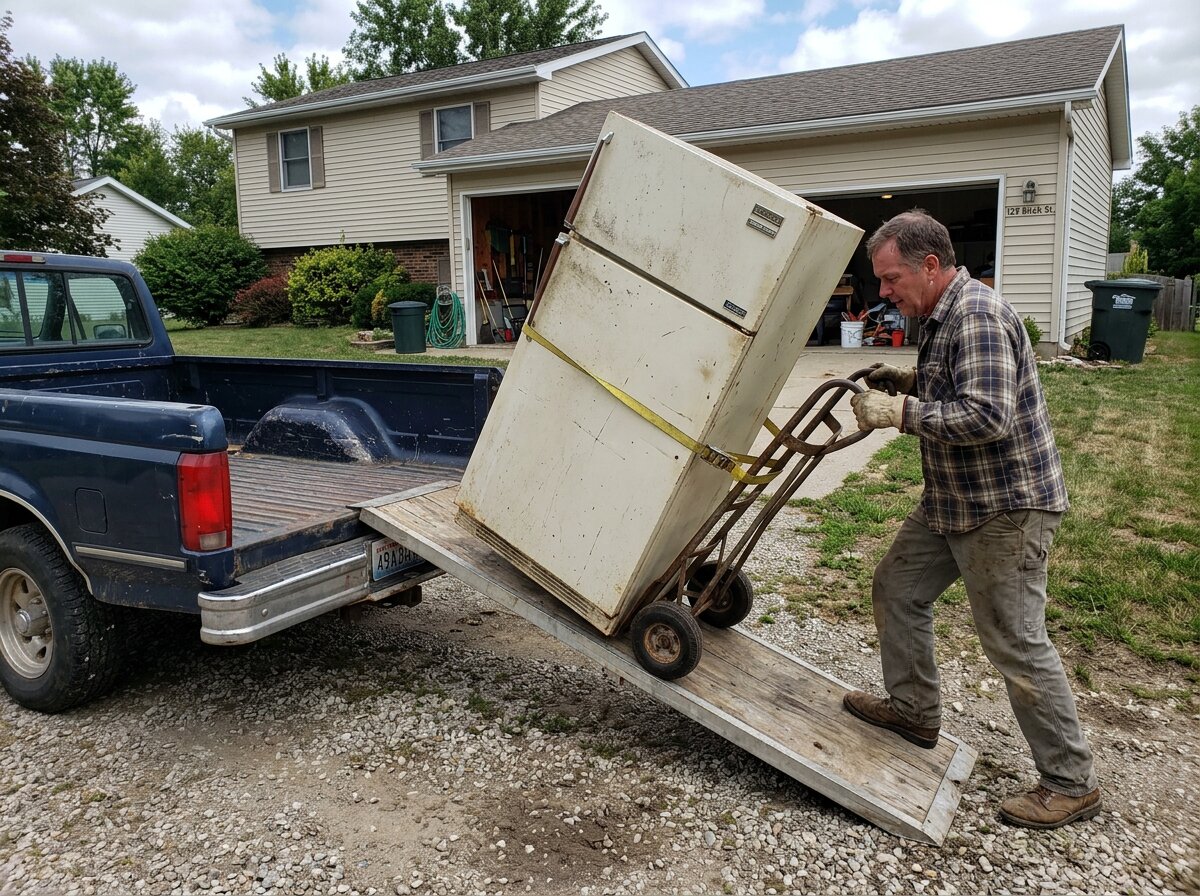
For a single easy-access appliance on a ground floor, DIY hauling to a scrap yard or municipal drop-off is very doable with a hand truck, moving straps, and a pickup truck or trailer. For appliances on upper floors, in tight spaces, or when disposing of several units at once (like a full kitchen renovation), a junk removal service saves your back and your walls from damage.
Materials & Tools
If you’re hauling appliances yourself, these tools make the job safer and easier:
- Milwaukee Foldable Hand Truck — for moving heavy appliances without straining your back
- CargoSmart Ratchet Tie-Down Straps — for securing appliances during transport
- Neiko Adjustable Appliance Dolly with Stair Climbers — for navigating stairs with refrigerators and washers
- Channellock Adjustable Wrench Set — for disconnecting water and gas lines
- Klein Tools Voltage Tester — to confirm power is off before disconnecting hardwired units
- Gorilla Grip Furniture Moving Pads — to protect floors and doorways during the move
When to Call a Pro
Call a professional appliance removal or junk hauling service if:
- You’re disposing of multiple large appliances at once (kitchen or laundry room renovation)
- The appliance is on an upper floor, in a basement, or requires navigating tight stairwells
- You need to disconnect a gas line and aren’t experienced with gas fittings
- You’re unsure how to safely recover refrigerant, or your local scrap yard requires a certificate you can’t obtain
- The unit is extremely heavy (commercial-grade refrigerators, old cast-iron stoves) and poses an injury risk to move alone
Not feeling confident? Local partners can complete this job quickly and professionally. Find a Local Pro.
Leave a Reply