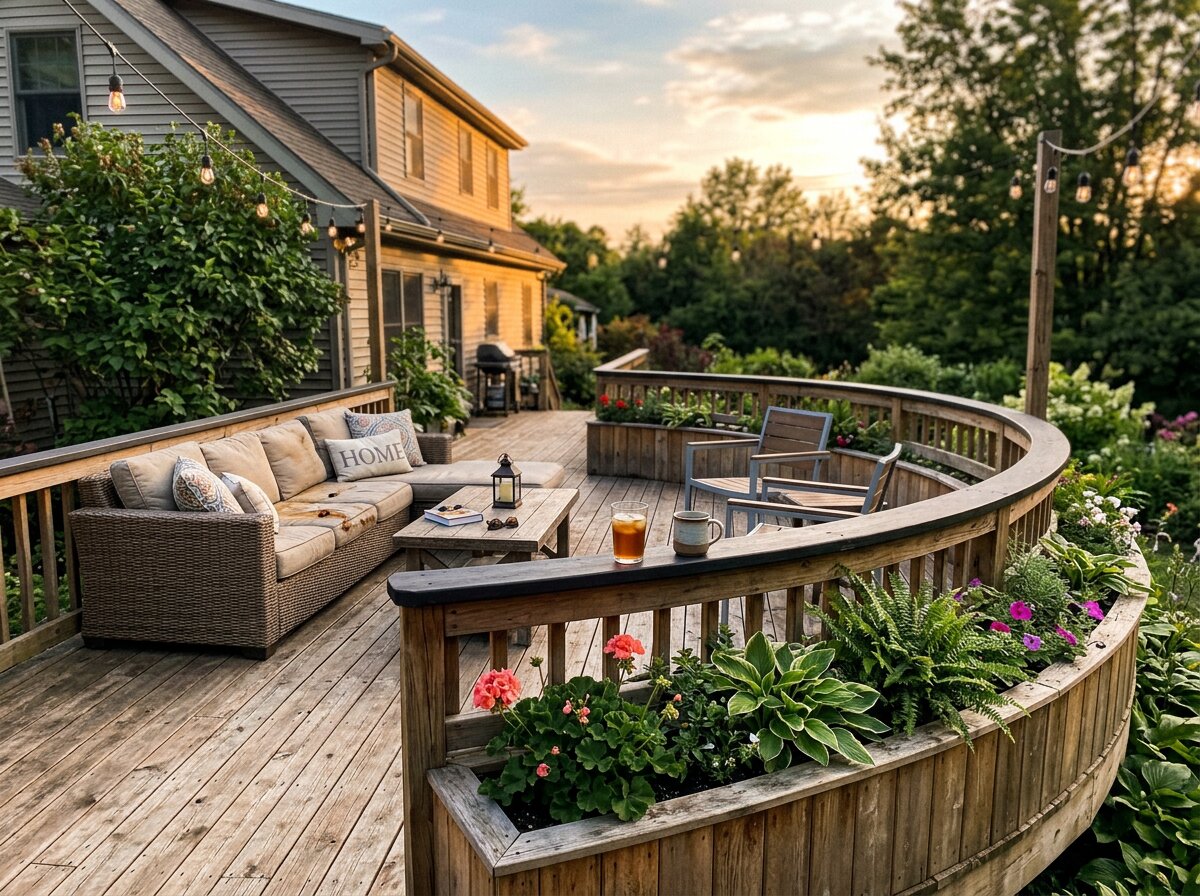
Looking for deck ideas that will transform your outdoor space? Whether you’re working with a tiny urban backyard or a sprawling suburban lot, the right deck design can completely change how you use and enjoy your outdoor living area. From multi-level entertainment spaces to compact platforms built for two, these 20 deck ideas cover every style, budget, and skill level — with DIY difficulty ratings to help you choose a project that matches your abilities.
The best part? Many of these deck ideas are completely DIY-friendly for a motivated homeowner, while more ambitious builds tell you exactly when to bring in a pro. In this guide you’ll find seven small backyard deck ideas, thirteen large backyard deck ideas, a decking material comparison, and climate-specific advice so your new deck looks great and lasts for decades.

Materials and Tools Needed
No matter which deck idea you choose, these are the core materials and tools you’ll likely need:
- Composite decking boards — Low-maintenance alternative to wood.
- Deck lighting — Post caps, stair lights, and string lights for ambiance and safety.
- Deck stain and sealer — Essential for wood decks.
- Outdoor furniture — Weather-resistant pieces to complete the space.
- Pressure-treated lumber (2×6, 2×8, 2×10, 4×4, 6×6) — For framing and posts.
- Concrete and post anchors — For securing support posts.
- Joist hangers and structural screws — For strong, code-compliant framing.
- Tools — Circular saw, drill/driver, impact driver, level, tape measure, and chalk line.
Small Backyard Deck Ideas
Short on space? These small backyard deck ideas prove you don’t need a huge yard to create a beautiful, functional outdoor room.
1. Platform Deck (Grade-Level)
A platform deck sits low to the ground, often without rails, making it perfect for small backyards where a railing would feel imposing. It’s the simplest deck to build because it typically doesn’t require deep footings or a permit — check local codes. Build it as a standalone floating deck on deck blocks or a simple joist frame on concrete piers. DIY Difficulty: Easy — ideal first deck project. Best for: Small flat yards, tight budgets, beginner DIYers.
2. Floating Corner Deck
A floating deck tucked into a corner of the yard creates an intimate outdoor room without consuming your entire lawn. Build it in an L-shape or triangle to maximize usable space, and use deck blocks rather than concrete footings to keep it simple. DIY Difficulty: Easy to Moderate. Best for: Yards under 400 sq. ft., renters (can be disassembled).

3. Compact Raised Deck with Built-In Seating
A small raised deck 18–30 inches off the ground with built-in bench seating along the perimeter doubles your usable space — the benches provide seating and hide storage underneath. This is a great solution for small backyards where furniture would crowd the deck. DIY Difficulty: Moderate — requires basic framing and bench construction skills. Best for: Small yards needing seating and storage in one structure.

4. Narrow Side-Yard Deck
That forgotten strip between your house and the fence can become a functional walkway deck or narrow lounging area. Build a simple 4-foot-wide deck on joists running perpendicular to the house, then add slim planters and a bench for a cozy reading nook. DIY Difficulty: Easy to Moderate. Best for: Side yards, narrow spaces, connecting front and back yards.
5. Rooftop Deck for Urban Homes
If you have a flat roof or garage with roof access, a rooftop deck creates outdoor living space in the tightest urban environment. Use interlocking deck tiles over a protective rubber membrane, or build a floating frame with sleeper joists. Weight is the key concern — keep it light and consult a structural engineer if unsure. DIY Difficulty: Moderate to Advanced — weight limits and waterproofing are critical. Best for: Urban homes, flat roofs, small apartments with roof access.
6. Balcony Deck for Upper-Level Access
A small balcony deck off a second-story bedroom or living room adds outdoor access where ground space is limited. It requires proper ledger attachment, engineered joists, and code-compliant railings, so this is not a beginner project. DIY Difficulty: Advanced — structural requirements and railing codes are strict. Best for: Homes with walk-out upper levels, hillside homes.
7. Multi-Use Deck with Planter Boxes
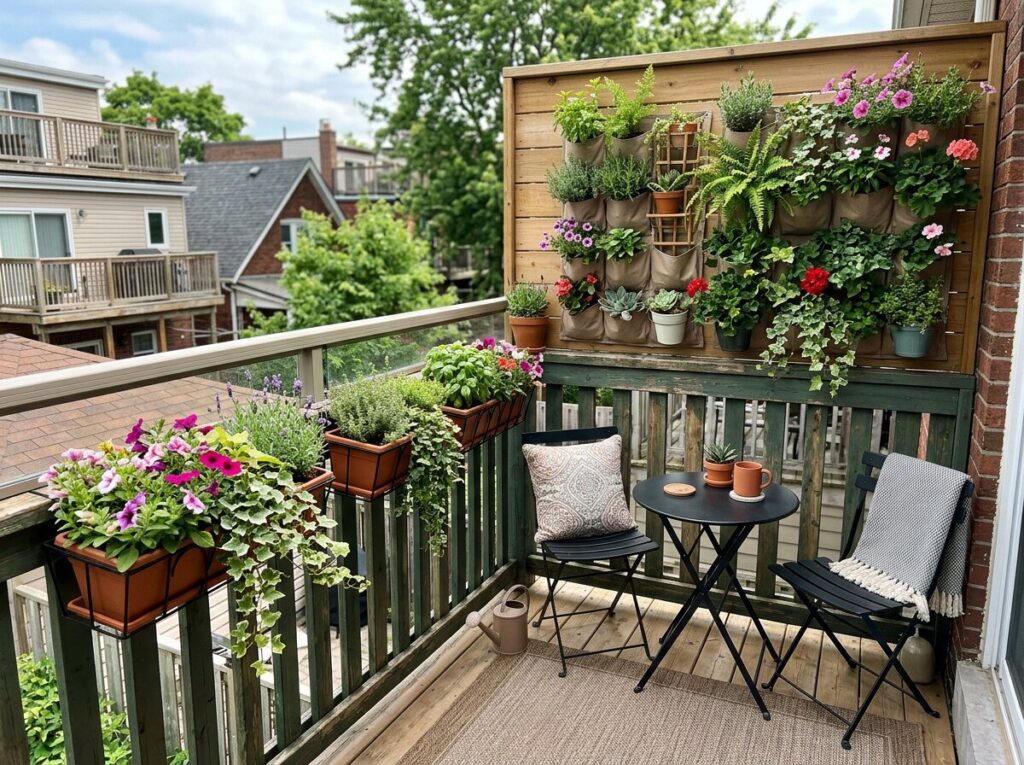
Integrate cedar or composite planter boxes into the deck design to bring greenery into a small space without sacrificing floor area. Build planters as part of the railing or as corner features — herbs, succulents, and small ornamental grasses all thrive in deck planters. DIY Difficulty: Moderate. Best for: Gardeners with small yards, urban decks.
Large Backyard Deck Ideas
Have room to spread out? These large backyard deck ideas turn generous outdoor space into a true extension of your home for dining, entertaining, and relaxing.
8. Multi-Level Deck
A multi-level deck breaks a large space into distinct zones — dining, lounging, cooking — connected by stairs. Each level can have a different function and even a different decking pattern. This is one of the most dramatic and functional deck designs for large, sloped, or multi-tier backyards. DIY Difficulty: Advanced — multiple levels require precise stair construction and structural engineering. Best for: Sloped yards, large backyards, homes with walk-out basements.

9. Wraparound Deck
A wraparound deck extends around two or more sides of your home, creating a seamless flow between different outdoor areas. It’s ideal for homes with great views on multiple sides or for creating sun/shade options throughout the day. DIY Difficulty: Advanced — large footprint, corner framing, and long spans require skill. Best for: Large homes, properties with views, sunny climates where shade matters.
10. Raised Deck with Full Staircase
A raised deck 3–8 feet off the ground with a wide, welcoming staircase creates a grand transition from house to yard. The space underneath can be screened for storage or left open. Add skirting with lattice or horizontal slats for a finished look. DIY Difficulty: Moderate to Advanced — requires deep footings, tall posts, and stair construction. Best for: Homes with high first floors, sloped yards.
11. Pool Deck
A pool deck surrounds an above-ground or in-ground pool, providing a safe, slip-resistant surface for swimmers. Use composite decking — it won’t rot from constant water exposure — and leave gaps between boards for drainage. Include a gated section for pool safety. DIY Difficulty: Moderate to Advanced — waterproofing, drainage, and pool safety codes apply. Best for: Homes with pools, hot climates, family-friendly yards.
12. Outdoor Kitchen Deck
Design part of your deck to house a full outdoor kitchen — grill, countertop, mini-fridge, and even a pizza oven. The deck framing needs to be reinforced to support the weight of masonry and appliances, and you should use stone or composite decking near the cooking area for fire safety. DIY Difficulty: Advanced — structural reinforcement and gas/electric/plumbing rough-ins. Best for: Entertainers, large decks, warm climates.
13. Deck with Pergola
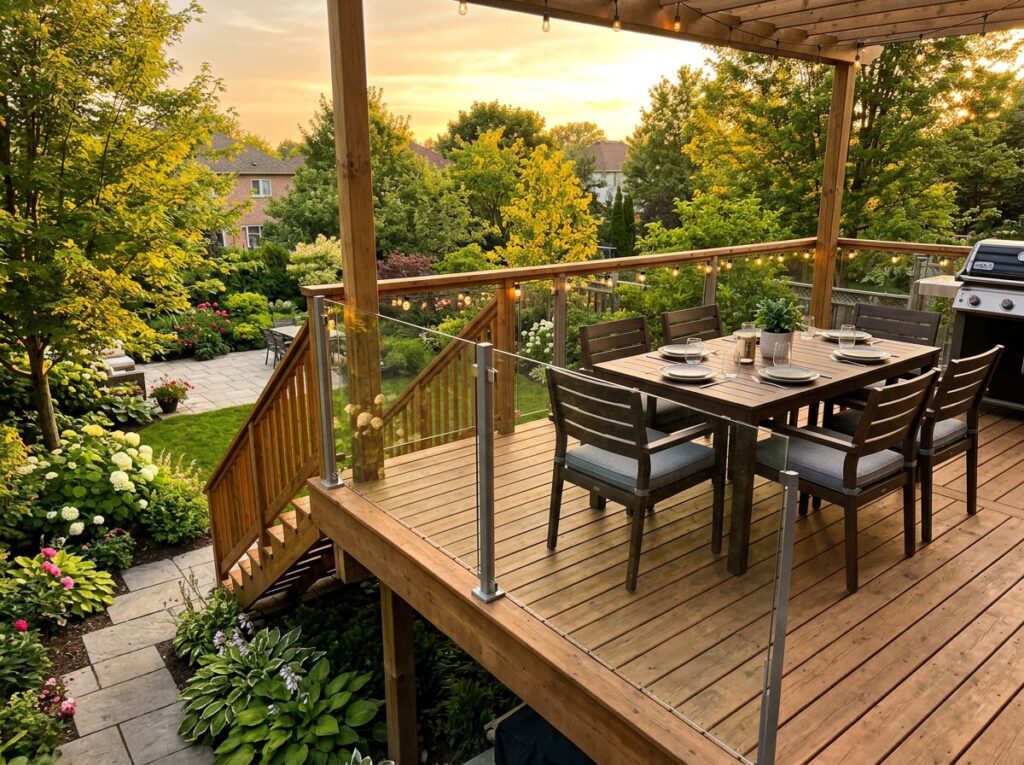
A pergola adds vertical interest, partial shade, and architectural character to any deck. Build it as a freestanding structure or attach it to the house, and grow climbing plants like wisteria, clematis, or grapes over the top for living shade. DIY Difficulty: Moderate — straightforward post-and-beam construction. Best for: Sunny yards, decks without natural shade, romantic or Mediterranean style.
14. Deck with Built-In Fire Pit
A sunken or surface-level fire pit on the deck creates a gathering spot for cool evenings. Use a gas fire pit — safer for decks than wood-burning — and place it on a fire-rated pad, then surround it with built-in seating for a custom look. DIY Difficulty: Moderate — fire safety considerations and gas line installation if gas. Best for: Cool climates, evening entertaining, large decks.
15. Deck with Privacy Screens
Add lattice, horizontal slat, or frosted glass privacy screens to block neighbors and create a more intimate outdoor room. Privacy screens can also double as wind breaks and support for climbing plants. DIY Difficulty: Easy to Moderate — simple framing and paneling. Best for: Close neighbors, urban decks, wind-exposed properties.
16. Deck with Integrated Lighting
Layered lighting transforms a deck from a daytime to a nighttime space. Combine post cap lights for ambient glow, stair riser lights for safety, under-rail strip lighting for drama, and string lights for warmth. Low-voltage LED systems are DIY-friendly and energy-efficient. DIY Difficulty: Easy — low-voltage lighting is safe and simple to install. Best for: All decks — lighting enhances any size or style.
17. Deck with Built-In Benches and Storage
Built-in perimeter benches provide seating without taking up floor space, and hinged seat tops reveal storage for cushions, grill supplies, and garden tools. Use pressure-treated or cedar for the frame and match the decking material for the seat tops. DIY Difficulty: Moderate — requires basic cabinetry skills. Best for: Small and medium decks, storage-challenged yards.
18. Curved Deck
A deck with curved edges softens the rigid geometry of traditional rectangular designs and follows natural yard contours. Kerf-bending — cutting multiple kerfs in pressure-treated lumber — or flexible composite decking boards make curves achievable for DIYers. DIY Difficulty: Advanced — curved framing and decking require skill and patience. Best for: Organic-style landscapes, large yards, contemporary homes.
19. Two-Tone Decking Pattern
Mix two colors of decking — one for the field and one for the border or inlay — to create visual interest without adding complexity. A picture-frame border in a contrasting color around the perimeter is a simple way to elevate any deck design, while herringbone or chevron inlays are more ambitious but stunning. DIY Difficulty: Easy (picture-frame border) to Advanced (herringbone inlay). Best for: Any deck where you want a custom, high-end look.
20. Deck with Hot Tub Platform
A dedicated hot tub platform — either integrated into the main deck or set slightly apart — creates a spa-like retreat. The deck framing must be engineered to support the massive weight of a filled hot tub, often 3,000–5,000 lbs. Recess the tub partially into the deck for a seamless look, or build a surround with access panels. DIY Difficulty: Advanced — weight calculations, electrical, and structural engineering required. Best for: Large decks, cold climates, wellness-focused homeowners.
Choosing the Right Decking Material
The material you choose affects maintenance, longevity, and cost. The comparison below breaks down the five most common decking materials so you can match the right one to your budget and skill level.

DIY recommendation: Pressure-treated pine is the most forgiving and budget-friendly option for first-time deck builders. Composite decking costs more upfront but eliminates staining — ideal if you want a low-maintenance deck that looks great for decades.
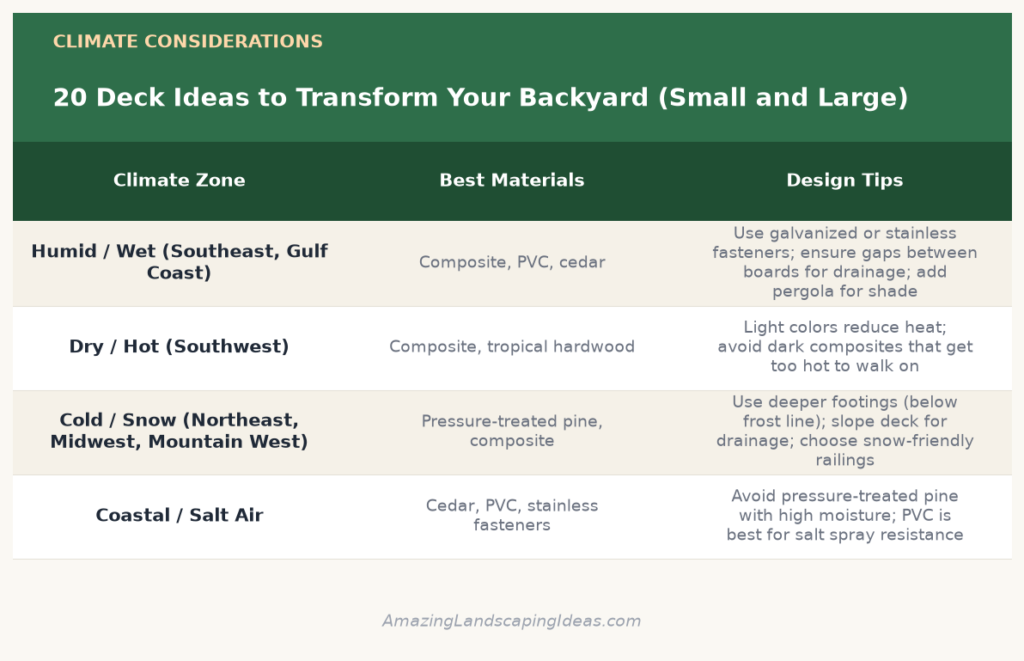
Climate Considerations
Your local climate should guide your material and design choices. The guide below shows the best materials and design tips for humid, hot, cold, and coastal regions so your deck holds up to the weather year after year.
When to Call a Pro
Many decks are DIY-achievable, but some situations warrant professional help:
- Decks more than 30 inches off the ground — Require engineered footings, tall posts, and code-compliant railings.
- Multi-level or complex designs — Structural complexity increases dramatically.
- Decks supporting heavy loads — Hot tubs, outdoor kitchens, or masonry features need engineering.
- When permits are required — Most municipalities require permits for decks attached to the house or over 200 sq. ft. A pro handles permitting and inspections.
- Ledger board attachment to the house — Improperly flashed ledger boards cause water damage and structural failure. If you’re unsure about proper flashing, hire a pro.
If your project leans toward the advanced end, a professional deck builder can save you time and ensure everything is safe and up to code. For related help maintaining an existing deck, see our guide to DIY deck repair.
Frequently Asked Questions
What is the cheapest deck idea to build?
A grade-level platform deck built from pressure-treated pine on deck blocks is the most budget-friendly option. It skips deep footings and railings, keeping both material and labor costs low, which makes it an ideal first deck project.
Do I need a permit to build a deck?
It depends on your municipality. Most areas require a permit for decks attached to the house, decks over a certain height, or those larger than about 200 square feet. Freestanding, ground-level platform decks often don’t need one — always check your local codes before you start.
Which decking material is best for a low-maintenance deck?
Composite and PVC decking require the least maintenance — no staining or sealing, just occasional cleaning — and last 25 to 50 years. They cost more upfront than wood but save time and money over the life of the deck.
Find a Local Deck Pro
Not feeling confident? Local partners can complete this job quickly and professionally. Find a Local Pro to get started on your dream deck.
Final Thoughts on These Deck Ideas
Whether you’re building a simple ground-level platform for a small urban yard or a multi-level entertainment deck for a sprawling backyard, the right deck design can transform how you use your outdoor space. Start by assessing your yard size, your DIY skill level, and your budget — then choose an idea from this list that fits. Even simple decks benefit from quality materials, proper framing, and thoughtful details like lighting and built-in features. With composite decking reducing maintenance and modern fasteners simplifying construction, there’s never been a better time to build the deck of your dreams.
Ready to get started? Browse more outdoor project inspiration on the Amazing Landscaping Ideas homepage, and for code-compliant framing and railing guidance, consult the North American Deck and Railing Association. With the right prep and a little patience, your new deck will look like it was built by a pro.
Leave a Reply