A successful garage cleanout transforms a cluttered, unusable space into an organized extension of your home in a single weekend. The key is a systematic approach: pull everything out, sort into keep/donate/sell/trash piles, deep-clean the empty space, then reinstall only what you truly need using vertical shelving, pegboards, and overhead storage. Budget a full day or weekend, gather heavy-duty trash bags, storage bins, and basic tools, and have a disposal plan ready before you start. For landscaping enthusiasts, the garage cleanout is also the perfect time to reorganize yard tools, fertilizers, and seasonal equipment so your outdoor projects run smoothly all year.

Why Garages Become Cluttered and Why It Matters
Garages tend to become the default dumping ground for everything that doesn’t have a home inside the house. Broken tools, half-finished projects, seasonal decorations, sports equipment, and old paint cans pile up until you can barely park a car inside. A disorganized garage also creates a ripple effect on your landscaping work — when you can’t find your pruners, hedge trimmer, or fertilizer, yard maintenance takes twice as long. Cleaning out your garage gives you back usable square footage, protects your tools and equipment from damage, and makes every outdoor project faster and more enjoyable. Plus, a clean garage is safer — tripping hazards disappear, chemical spills are easier to spot, and pests have fewer hiding spots.
Planning Your Garage Cleanout
Set a Date and Block Time
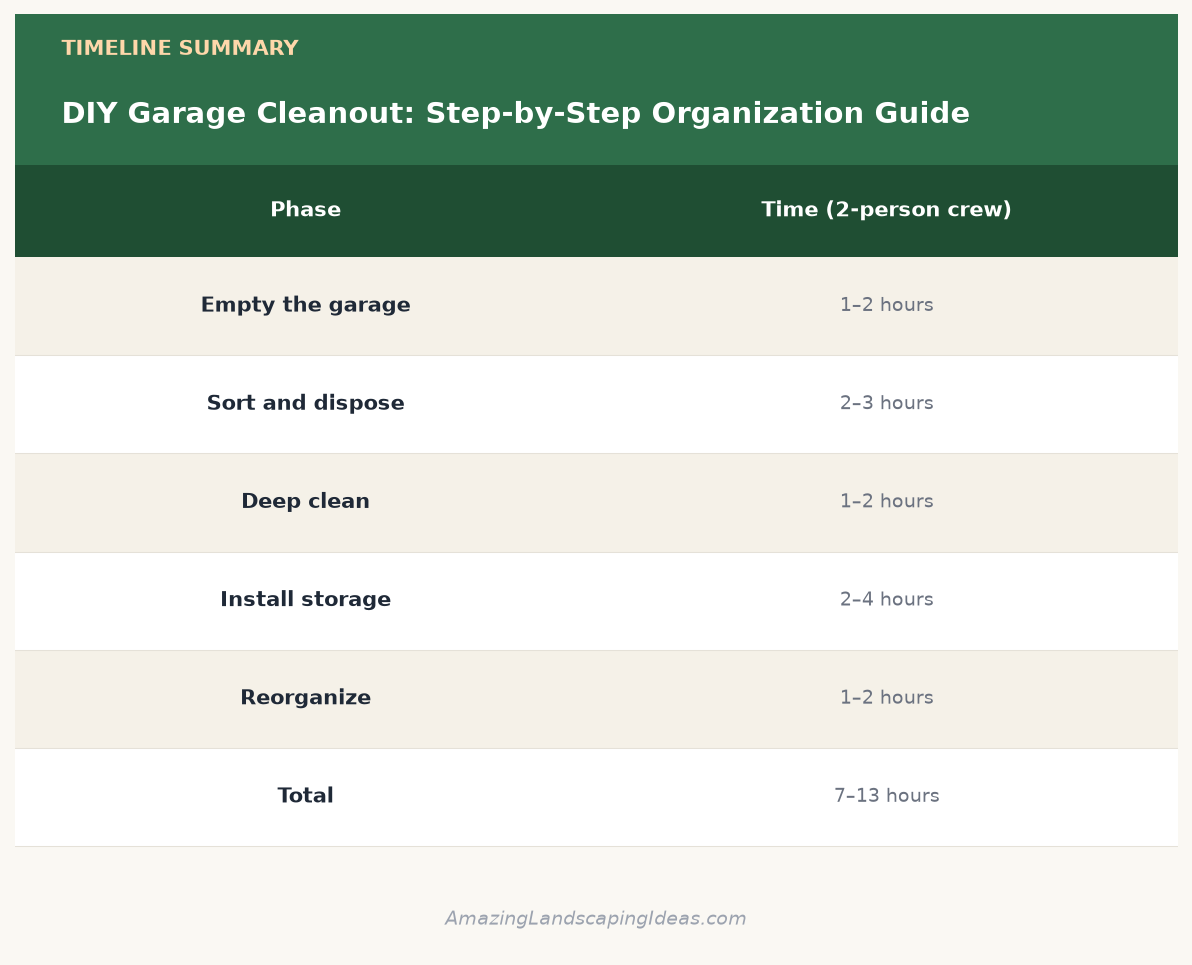
Pick a full weekend with dry weather. You’ll need to move items outside temporarily, so rain is a dealbreaker. If you have a driveway or patio, that becomes your staging area. A typical two-car garage takes 6–10 hours of focused work for two people. If you’re solo, plan for two days.
Gather Supplies Before You Start
Having everything on hand prevents mid-project trips to the hardware store. Here’s what you’ll need:
- Heavy-duty contractor trash bags
- Cardboard boxes for donate and sell piles
- Sticky labels and a permanent marker
- Masking tape for marking zones
- A shop vacuum
- Broom and dustpan
- All-purpose cleaner and rags
- Work gloves and a dust mask
- A friend or family member to help with heavy lifting
Line Up Disposal Options in Advance
Don’t wait until your garage is empty to figure out where the junk goes. Before you start, schedule a donation pickup, research local hazardous waste drop-off locations, decide whether you need a dumpster rental or dumpster bag, and check if your city offers bulk pickup.
Materials & Tools
- Rubbermaid Brute 45-Gallon Totes — Heavy-duty storage bins for seasonal items and landscaping supplies.
- Husky 48-Inch Wall-Mounted Tool Cabinet — Lockable storage for chemicals and power tools.
- Gladiator GearTrack 8-Foot Channel Pack — Wall track system for hanging bins, hooks, and tools.
- SafeRacks 4×8 Overhead Storage Rack — Ceiling-mounted rack for bulky, infrequently used items.
- Wall Control 32-Square-Foot Pegboard Organizer — Metal pegboard for hand tools and yard equipment.
- DEWALT 20V Max Cordless Shop Vacuum — Portable wet/dry vac for cleaning the empty garage floor.
- Rust-Oleum EpoxyShield Garage Floor Kit — Two-part epoxy coating for a durable, cleanable floor.
- StormPro Heavy-Duty Trash Bags (42-Gallon) — Contractor-grade bags that won’t rip on sharp debris.
The Sorting System: Keep, Donate, Sell, Trash

Step 1: Empty the Garage Completely
This is the most important step. Pull everything out. Do not try to organize around clutter — you need a blank slate. Place items in zones on your driveway:
- Keep zone — Items that belong in the garage and are actively used.
- Donate zone — Usable items you no longer need.
- Sell zone — Valuable items worth listing on Facebook Marketplace or Craigslist.
- Trash zone — Broken, expired, or unusable items.
Step 2: Sort Ruthlessly
As you handle each item, ask three questions: Have I used this in the last year? Does it work? Would I buy it again today? If the answer to all three is no, it goes to donate, sell, or trash. Be especially aggressive with:
- Old paint and chemicals — If they’re expired or you don’t remember what they’re for, take them to hazardous waste. Don’t keep mystery cans.
- Broken tools — A rusted shovel or cracked rake takes up space. Replace it.
- Duplicate items — You don’t need three tape measures or four pairs of gardening gloves.
- Cardboard boxes — Flatten and recycle. They attract pests and hold moisture.
Step 3: Handle the Piles Immediately
The biggest mistake people make is leaving the donate and trash piles sitting in the garage for later. Later never comes.
- Schedule a donation pickup the same week — Salvation Army, Habitat for Humanity ReStore, and local thrift stores often offer free pickup.
- List sell items within 48 hours — if they don’t sell in two weeks, donate them.
- Load the trash and take it to the dump, or set it out for bulk pickup.
Deep Cleaning the Empty Garage
With the garage empty, this is your once-in-a-decade chance to clean the space itself.
Sweep and Vacuum Everything
Start at the top — use a broom to knock down cobwebs and dust from ceiling joists and shelves. Work your way down walls, shelving, then the floor. A shop vacuum makes quick work of leaves, gravel, and dust in corners.
Inspect for Pests and Moisture
Look for signs of rodent activity (droppings, chewed wiring, nests) and moisture issues (water stains, efflorescence on concrete, mold). If you find water intrusion, seal cracks with a concrete patch and consider applying a waterproofing sealer to the floor and lower walls.
Consider a Floor Coating
A bare concrete garage floor absorbs oil, stains, and dust. An epoxy floor coating — like the Rust-Oleum EpoxyShield kit — creates a durable, easy-to-clean surface that brightens the whole garage. Apply it while the space is empty. It takes a full day to prep, apply, and cure, and you’ll need to keep vehicles off it for 72 hours.

Storage Solutions: Building Your Organization System
Vertical Shelving
Wall-mounted shelving is the backbone of garage organization. Freestanding metal shelving units work well for heavy bins and bulk landscaping supplies like mulch and potting soil. For maximum strength, install heavy-duty wall-mounted brackets and 2×8 shelves into studs — these hold far more weight than prebuilt units and can be sized to fit your space. Place shelving along the perimeter walls, keeping the center of the garage clear for parking and project space. Keep frequently used items between waist and shoulder height; reserve high shelves for seasonal and rarely used items.
Pegboards for Tools
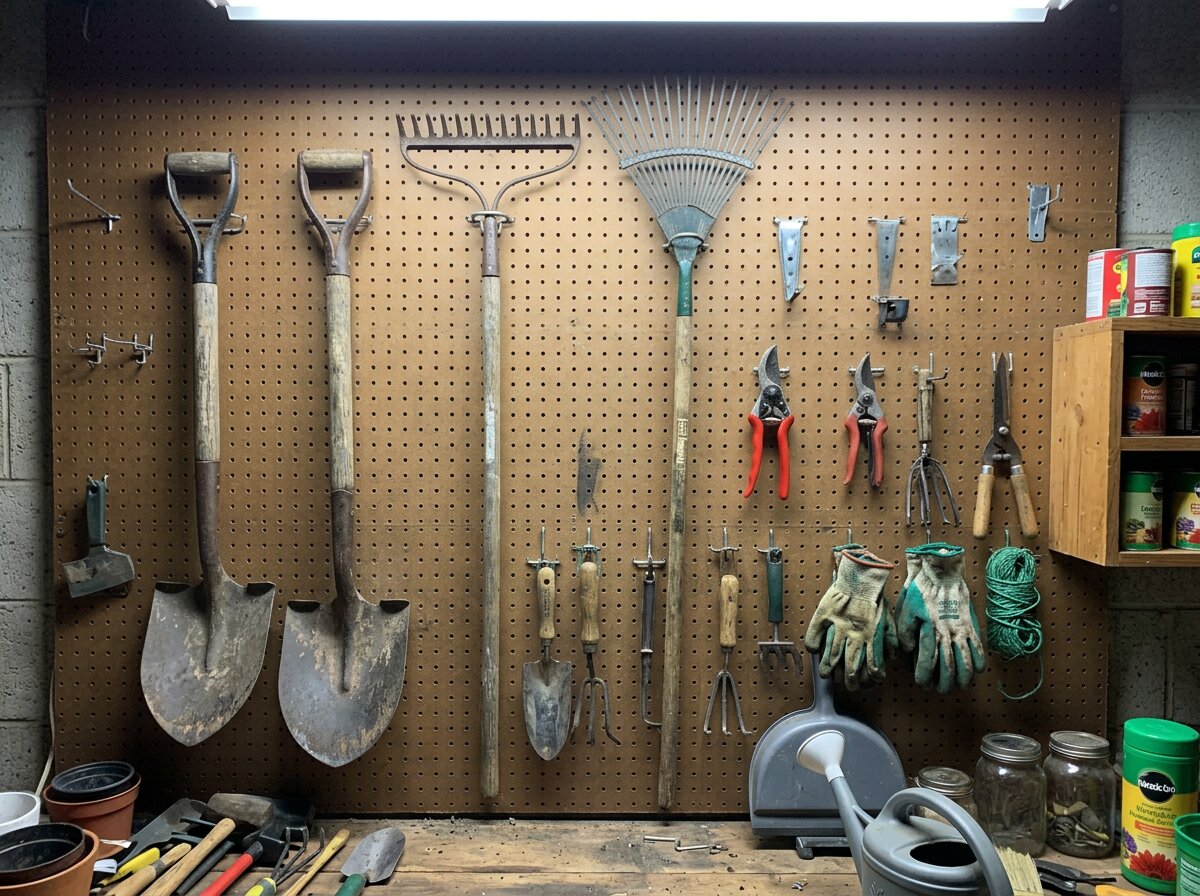
A metal pegboard system — like the Wall Control panels — turns an empty wall into a highly visible tool station. Mount hand tools, garden shears, pruners, and small landscaping accessories on hooks. The advantage over drawers: everything is visible and accessible, so you grab what you need and put it back.
Overhead Storage
The ceiling is the most underused storage area in most garages. An overhead storage rack like the SafeRacks 4×8 system holds 500 pounds and is perfect for:
- Seasonal items (holiday decorations, patio cushions)
- Camping gear
- Empty planters and pots
- Ladders
Keep overhead storage away from garage door tracks and openers — leave at least 18 inches of clearance.
Yard Tool Organization
For landscaping enthusiasts, dedicated tool storage is the payoff of the whole project.
- Wall-mounted tool racks — Keep long-handled tools (shovels, rakes, hoes, trimmers) off the floor on a track system like the Gladiator GearTrack. Each tool gets a dedicated hook so nothing leans in a corner.
- Locked chemical cabinet — Store fertilizers, pesticides, and fuels in a lockable cabinet away from children and pets, and off the floor to avoid moisture damage.
- Hose and cord reels — Mount retractable reels on the wall to keep hoses and extension cords tangle-free.
- Small parts organizer — Use a parts cabinet with clear drawers for seeds, stakes, drip irrigation fittings, and landscape staples.
Reorganizing by Zones
Once your storage is installed, bring back only the keep items — and put them in defined zones:
- Yard and landscaping zone — Tools, fertilizers, pots, and seasonal equipment near the door closest to the yard.
- Automotive zone — Fluids, jumper cables, and car-care products.
- Workshop zone — Power tools, workbench, and hardware.
- Sports and outdoor zone — Bikes, balls, camping gear.
- Seasonal zone — Holiday decorations and patio items, stored overhead.
Label every bin and shelf. It feels excessive until you’re looking for your string trimmer line in March and find it in 10 seconds instead of 20 minutes.
Climate and Regional Considerations
Your garage organization strategy should adapt to your climate:
- Hot, humid climates (Southeast, Gulf Coast): Prioritize moisture control. Use a dehumidifier, store metal tools with desiccant packs to prevent rust, and keep cardboard to a minimum — it harbors mold and silverfish.
- Cold, snowy climates (Northeast, Midwest): Winter gear, snow blowers, and ice melt need accessible zones near the garage door. Insulate pipes in the garage and keep a heater-rated extension cord accessible.
- Dry, hot climates (Southwest): Heat is the enemy. Don’t store temperature-sensitive items (certain chemicals, seeds, wax-based products) in an uninsulated garage. Consider a vent or exhaust fan.
- Wet climates (Pacific Northwest): Overhead storage should be at least 24 inches below the ceiling to avoid roof leaks. Use sealed bins, not open shelves, for anything that water would damage.
Timeline Summary
When to Call a Pro
Most garage cleanouts are fully DIY-able, but consider professional help when:
- You have significant hazardous waste — If you’re dealing with decades-old paint, solvents, or unknown chemicals, a hazardous waste removal service ensures safe and legal disposal.
- You need heavy shelving installed in concrete block walls — Anchoring into concrete requires specialty tools and know-how. A handyman can install shelving safely in an afternoon.
- The garage has structural or moisture issues — Water intrusion, foundation cracks, or pest infestations need a contractor, not a storage solution.
- You want a custom built-in system — If you’re envisioning custom cabinetry, a slatwall system, or a finished garage conversion, a professional garage organization company will deliver cleaner results in less time.
- The cleanout volume is overwhelming — If you’re clearing out a deceased relative’s home or a hoarding situation, a junk removal company like 1-800-Got-Junk can haul away everything in one truckload.
Not feeling confident? Local partners can complete this job quickly and professionally.
Leave a Reply