Land clearing is the process of removing trees, brush, stumps, rocks, and debris to prepare a lot for landscaping, construction, or agriculture. You can safely handle small-scale clearing yourself — brush cutting, sapling removal, stump grinding on small stumps, and rock picking — but anything involving large trees, steep slopes, heavy machinery, or protected wetlands should be left to professional land clearing services. DIY land clearing costs $200–$2,000 for tools and disposal, while professional services run $1,500–$15,000 per acre depending on terrain and vegetation density. The right choice depends on lot size, tree diameter, slope, soil type, and local permit requirements.
Understanding Land Clearing Scope
Land clearing encompasses several distinct tasks, each with different skill and equipment requirements.
- Brush and undergrowth removal — Removing shrubs, vines, brambles, and small saplings under 3 inches diameter. This is the most DIY-friendly category — achievable with hand tools and a brush mower.
- Small tree cutting — Felling trees up to 6 inches in diameter is possible for an experienced DIYer with proper technique and safety gear. Anything larger requires professional equipment and expertise.
- Stump grinding and removal — Small stumps under 12 inches can be ground out with a rental grinder. Large stumps, especially those with extensive root systems, may require excavation equipment.
- Grubbing — Removing root systems and below-grade organic material to prevent regrowth and prepare soil for construction. This is labor-intensive and often requires heavy machinery.
- Rock and boulder removal — Surface rocks can be moved by hand or with a come-along. Large boulders or extensive rock fields need excavation equipment.
- Grading and leveling — Reshaping the ground surface for drainage or construction pads. Requires skid steers, box blades, or bulldozers — pro territory.
What You Can Safely DIY
Clearing Brush and Brambles

- Tools: Brush axe, machete, string trimmer with brush blade, brush mower.
- Process: Cut at ground level, pile for burning or chipping, treat stumps with herbicide to prevent regrowth.
- Time: 1–3 days per quarter acre of dense brush.
Removing Small Trees Under 6 Inches
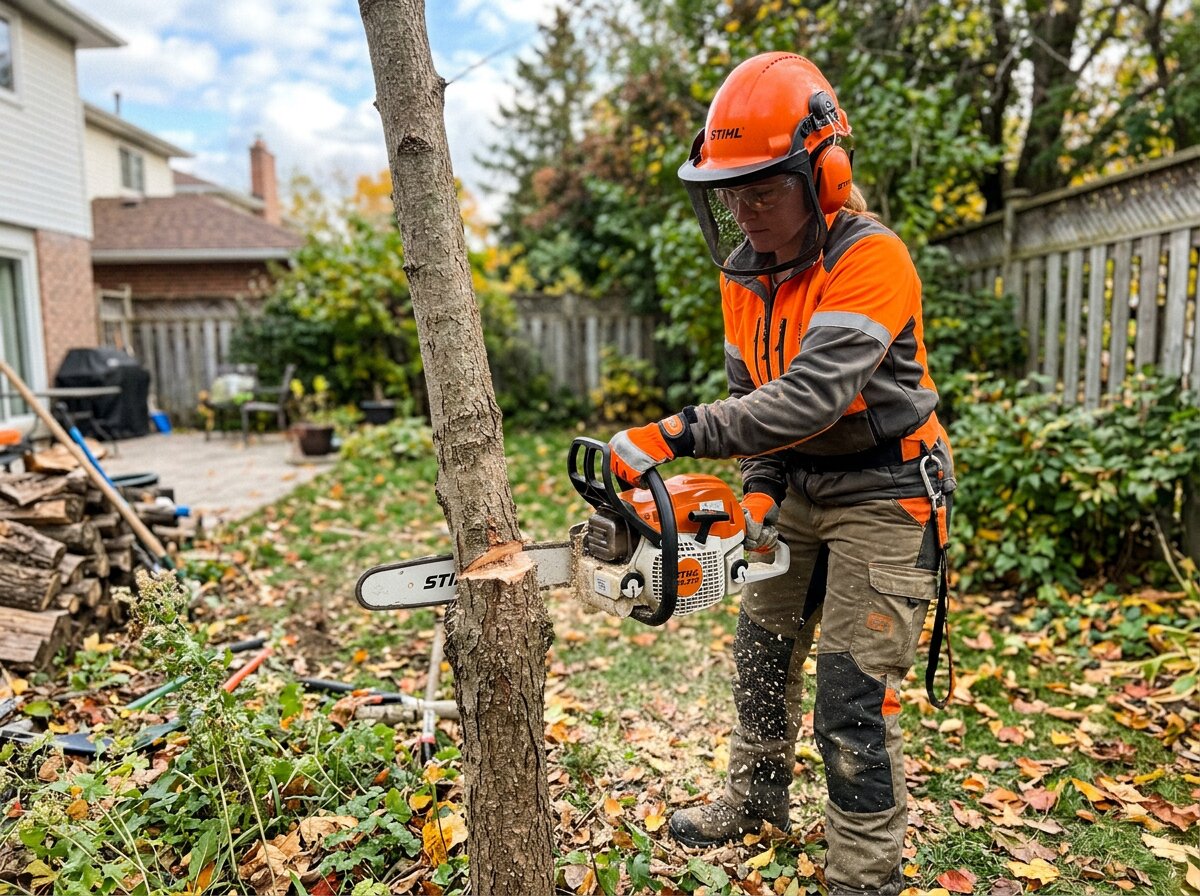
- Tools: Chainsaw (electric for small jobs, gas for larger), felling wedges, axe, safety gear.
- Process: Plan escape routes, make a directional notch, felling cut, and use wedges to control fall direction.
Critical: Never attempt tree felling near structures, power lines, or on steep slopes without professional help. Tree felling is one of the most dangerous DIY activities — chainsaw injuries send over 36,000 people to the ER annually in the US alone.
Grinding Small Stumps
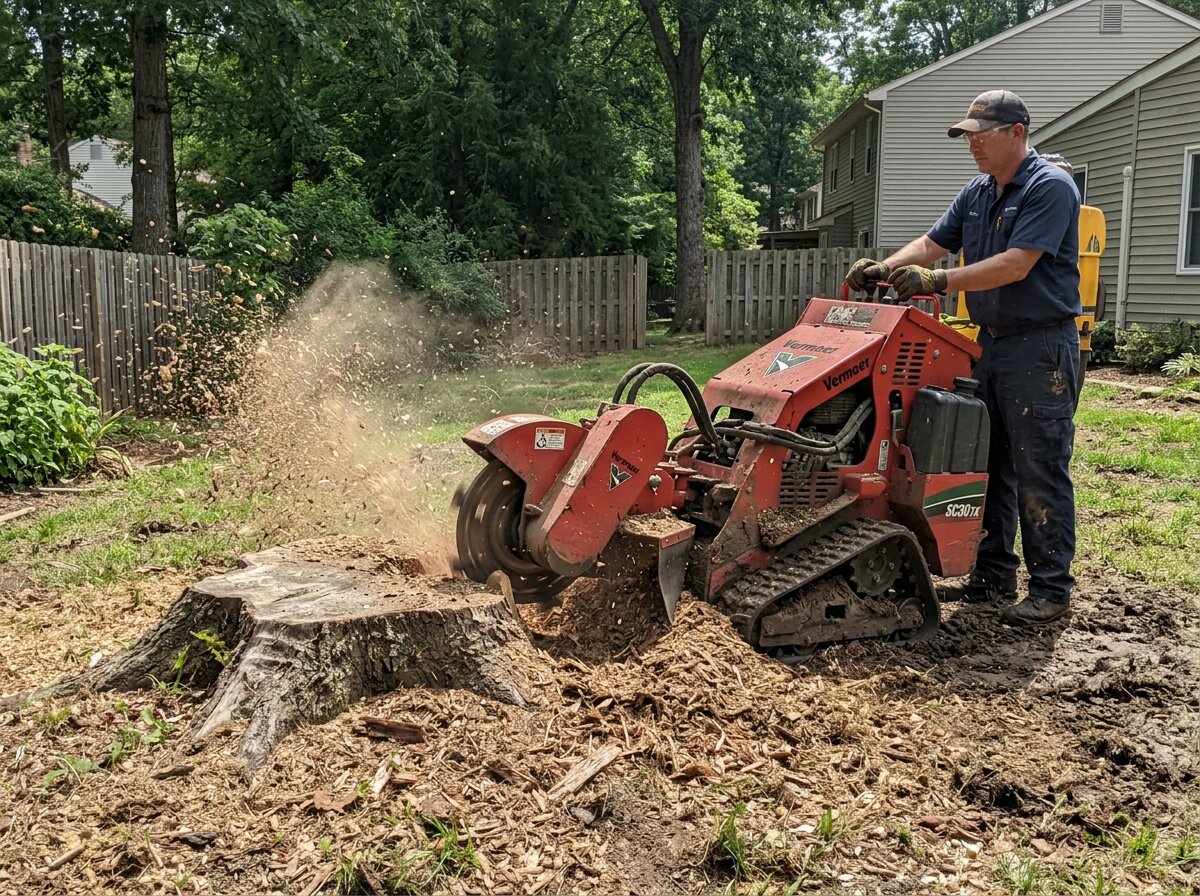
- Tools: Rental stump grinder (typically $100–$200/day), shovel, mattock.
- Process: Clear rocks from around the stump, grind 4–6 inches below grade, backfill with soil.
- Limitation: Rental grinders handle stumps up to about 12 inches. Larger stumps need commercial equipment.
Picking Rocks and Clearing Debris
- Tools: Pry bar, come-along winch, rock cart, shovel.
- Process: Loosen with a pry bar, lever onto a cart or dolly, haul to a pile or disposal.
Hand Grubbing Small Areas
- Tools: Mattock, pickaxe, shovel, axe.
- Process: Dig around stumps and major roots, cut roots, remove organic material below grade.
When to Hire Professional Land Clearing Services
Large Trees Over 6 Inches Diameter
Felling large trees requires professional arborist training or heavy equipment. Risks include:
- Improper fell direction causing property damage or injury.
- Tree “barber-chairing” (splitting vertically under tension).
- Hidden decay causing unpredictable behavior.
- Limited escape routes in tight lots.
Steep Slopes and Uneven Terrain
Operating equipment on slopes over 15 degrees requires experience and sometimes specialized machines. Hand clearing on slopes is slow and hazardous.
Wetlands and Protected Areas
Clearing near wetlands, streams, or in conservation zones may require permits and is often prohibited entirely. Federal Clean Water Act Section 404 permits apply to many wetland areas. Violations carry fines of $25,000 per day.
Extensive Acreage (Over 1 Acre)
Clearing more than an acre by hand is impractical. Professional services bring bulldozers, forestry mulchers, and excavators that clear an acre in a day or two.
Utility and Infrastructure Concerns
- Overhead power lines — Only certified line clearance arborists may work within 10 feet of energized lines.
- Underground utilities — Call 811 (Call Before You Dig) before any excavation.
- Septic systems and wells — Root systems can damage underground infrastructure.
- Property lines — Clearing trees on a neighbor’s property creates liability.
Permit Requirements
Most jurisdictions require permits for:
- Clearing over a certain square footage (often 5,000–25,000 sq ft).
- Removing trees above a protected diameter (often 6–12 inches at breast height).
- Any work in wetland buffer zones.
- Grading that changes drainage patterns.
- Clearing on steep slopes or erosion-prone areas.
Check with your city planning department, county extension office, and state environmental agency before beginning.
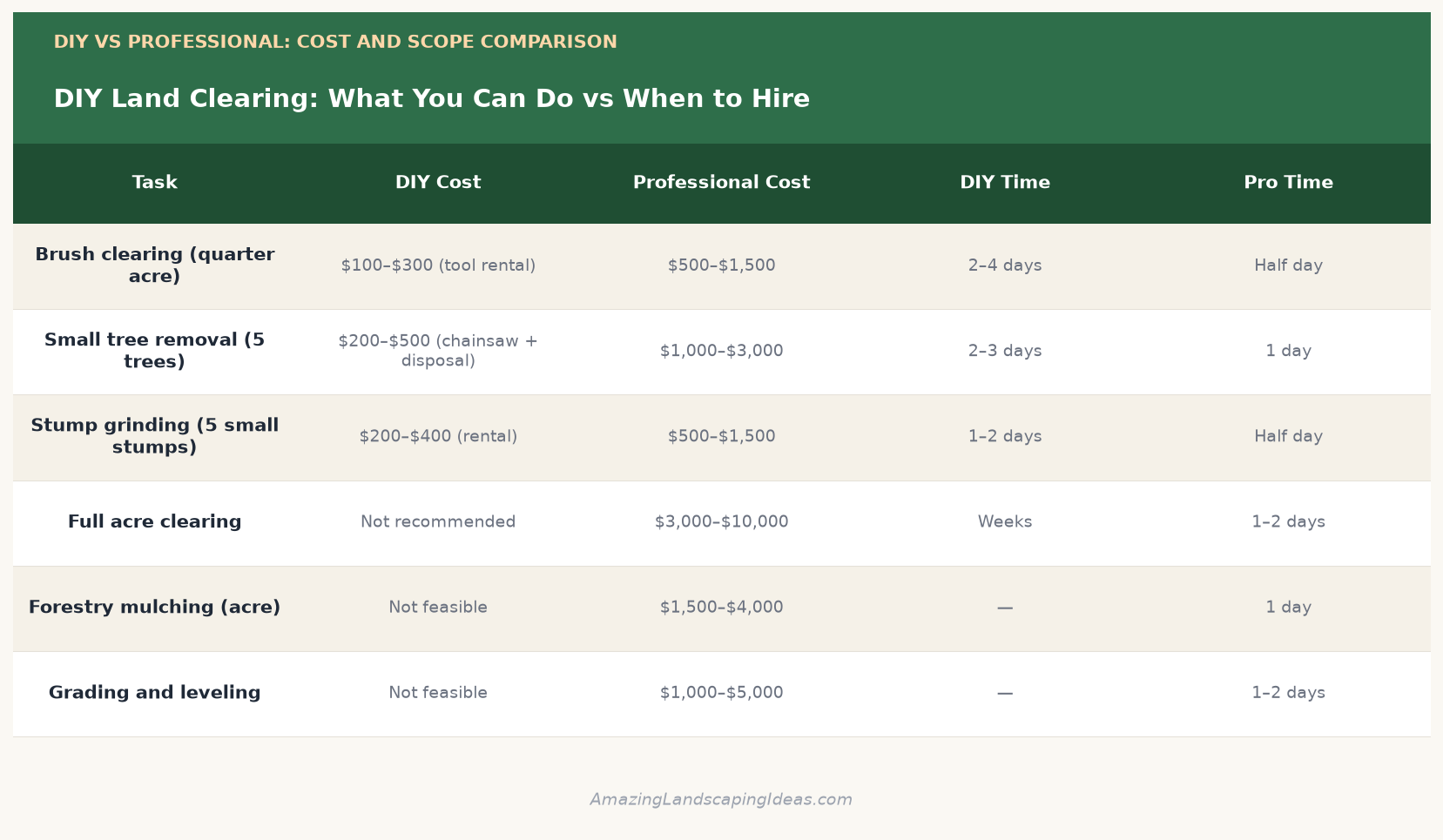
DIY vs Professional: Cost and Scope Comparison
Professional Land Clearing Methods
Forestry Mulching
A single machine (skid steer or track loader with a mulching head) grinds trees and brush into mulch in place. Fast, leaves soil protected, minimal site disturbance. Best for: Overgrown lots, invasive species control, pasture restoration. Cost: $1,500–$4,000 per acre.
Bulldozing and Grubbing
Traditional clearing with bulldozers that push over trees and grub roots. Effective but leaves a disturbed, compacted site that needs remediation. Best for: Pre-construction clearing where soil will be graded anyway. Cost: $2,000–$5,000 per acre.
Excavator Clearing
Precise removal of individual trees and stumps with an excavator. Preserves desirable trees while removing unwanted ones. Best for: Selective clearing, working around structures. Cost: $150–$300 per hour.
Safety Considerations for DIY Clearing
Personal Protective Equipment
- Chainsaw chaps — Cut-resistant leg protection required by OSHA for professionals, smart for everyone.
- Hard hat with face screen — Protects from falling branches and kickback.
- Steel-toed boots — Heavy debris and tools.
- Hearing protection — Chainsaws run at 100–115 dB.
- Cut-resistant gloves — Grip and protection.
- Safety glasses — Flying debris.
Safe Felling Technique
- Assess the tree — Check lean, decay, and overhead hazards.
- Plan the fall direction — Choose a clear path with adequate escape routes.
- Clear your retreat — Two paths at 45-degree angles behind you.
- Cut the notch — 70-degree open-face notch facing the intended fall direction.
- Make the felling cut — Back cut 1–2 inches above the notch, leaving a hinge of 10% of trunk diameter.
- Use wedges — Drive plastic felling wedges to keep the cut open and direct the fall.
- Retreat immediately — Move along your escape path as the tree begins to fall.
Never turn your back on a falling tree, and never cut above shoulder height.
Geographic and Climate Considerations
Rocky or Clay Soils (Mountain West, Midwest)
Stump grinding is slower and harder on equipment. Plan for extra time and tool wear.
Sandy Soils (Coastal Areas, Florida)
Trees often have shallow, widespread root systems. Felling direction is less predictable — hire a pro for larger trees.
Wet Climates (Pacific Northwest)
Ground is often saturated. Heavy equipment causes rutting and compaction. Schedule clearing during the dry season (July–September).
Fire-Prone Areas (West, Southwest)
Clearing creates defensible space, which may be required by law. Check local fire codes — California requires 100 feet of defensible space around structures.
Tornado and Hurricane Zones
Post-storm clearing involves hazardous leaning trees, hung-up branches (widowmakers), and compromised root systems. Always hire a pro for storm damage.
Materials & Tools
For a DIY land clearing project, invest in quality tools that keep you safe and productive:
- Husqvarna 460 Rancher Chainsaw (24-inch bar) — Powerful gas chainsaw for felling and bucking.
- STIHL Chain Saw Chaps (8-layer protection) — Essential leg protection.
- Husqvarna Technical Chainsaw Helmet — Hard hat with face screen and hearing protection.
- Fiskars Brush Axe — For clearing saplings and thick brush.
- Blue Max 22-ton Log Splitter — For processing felled trees into firewood.
- Tecomec Easy Rent stump grinder rental — For small stump removal.
- Maasdam PowR Pull Come-Along (1-ton) — For moving rocks and dragging brush.
- Echo SRM-410U Brush Cutter — String trimmer with blade attachment for dense brush.
- Husqvarna Felling Wedges (plastic, 5.5-inch) — For directional felling.
- OREGON chainsaw safety kit — Comprehensive PPE starter set.
When to Call a Pro
Call professional land clearing services when:
- Trees exceed 6 inches in diameter.
- The lot is over 1 acre.
- Terrain includes steep slopes, wetlands, or rocky ground.
- Power lines, structures, or septic systems are nearby.
- Protected trees or conservation zones apply.
- Storm damage has created hazardous leaning or hung-up trees.
- You need grading, leveling, or drainage work.
- Local permits are required and you need professional documentation.
Not feeling confident? Local partners can complete this job quickly and professionally. Find a Local Pro.
Land clearing is one of the most physically demanding and potentially dangerous DIY tasks. Know your limits, respect the power of trees and chainsaws, and bring in professionals whenever the scope or risk exceeds your comfort and experience.
Leave a Reply