If you’ve got an old, cracked, or unused swimming pool taking up space in your backyard, pool demolition is the process of removing an above-ground or in-ground pool — either completely or partially — and restoring the area for other uses. Homeowners can safely DIY the removal of most above-ground pools, but full in-ground pool demolition almost always requires heavy equipment, permits, and a licensed contractor. Partial fill-in removal is sometimes DIY-friendly for smaller pools, while complete excavation and haul-away is a professional job in most cases. Costs range from a few hundred dollars for an above-ground teardown to $3,000–$19,000 for in-ground removal depending on method and pool size. Before you swing a sledgehammer, it’s worth understanding the difference between the two main approaches — partial and full pool demolition — since they affect cost, timeline, resale value, and whether you’ll need a permit at all. This guide walks through both, plus the safety, drainage, and legal issues that trip up first-time DIYers.
Planning what comes next for the space? This pool demolition guide pairs well with our DIY hardscape installation guide and our DIY outdoor carpentry projects for beginners. Before any digging, always call 811 to locate utilities and check EPA guidance on pool water discharge.

Partial vs. Full Pool Demolition
Partial Demolition (Fill-In Method)
Partial demolition involves draining the pool, punching holes in the pool floor for drainage, breaking up the top 18–24 inches of the pool walls, and collapsing debris into the pool basin before backfilling with soil, gravel, and topsoil. This is the more affordable and faster option, typically costing $2,000–$7,000 for an in-ground pool.
- Pros: Lower cost, faster completion (often 2–5 days), less heavy equipment needed.
- Cons: Many jurisdictions require this to be disclosed on future home sales, buried debris can cause future settling, and some lenders or insurers flag partially-filled pools during real estate transactions.
Full Demolition (Complete Removal)
Full demolition means excavating and hauling away the entire pool shell — concrete, gunite, fiberglass, or vinyl liner and frame — along with all backfill of clean soil compacted in layers. This costs $5,000–$19,000 depending on pool size, material, and site access.
- Pros: Clean slate for rebuilding, no future disclosure complications, better long-term resale value, and space that can support sheds or additions.
- Cons: Significantly more expensive, longer timeline (1–2 weeks), and requires excavation equipment and truck access.
DIY Steps for Above-Ground Pool Removal
Above-ground pools are the most realistic DIY pool demolition project for most homeowners. Here’s the general process:
- Drain the pool completely. Use a submersible pump and check local codes — many municipalities restrict draining pool water into storm drains due to chlorine content. Dechlorinate first, or drain slowly onto a landscaped area away from your foundation.
- Disassemble the frame. Remove the top rail, uprights, and support braces — most above-ground pools bolt together and can be taken apart with basic hand tools.
- Cut and remove the liner. Cut the vinyl liner into manageable strips for disposal.
- Break down the base. Remove the sand, foam, or paver base material.
- Address the ground beneath. The area under an above-ground pool is often compacted and dead. Aerate, till, and amend the soil with topsoil and compost before reseeding or landscaping.
- Dispose of materials. Metal framing can go to a scrap yard for cash; liners and pads typically go in a standard dumpster or bulk trash pickup.

Why In-Ground Pool Demolition Usually Needs a Professional
In-ground pools — whether gunite, concrete, or fiberglass — involve structural excavation, heavy machinery (excavators, skid steers, dump trucks), and utility-line awareness that go well beyond typical DIY scope. Key reasons to call a pro:
- Structural weight and equipment. Concrete and gunite shells can be several inches thick and require jackhammers, hydraulic breakers, or excavators to break apart safely.
- Utility and plumbing lines. Pool plumbing, electrical conduit, and sometimes gas lines run through and around the pool area. Cutting into these without proper locating — call 811 before any digging — is dangerous and illegal.
- Drainage engineering. Backfilled pools need proper drainage layering (gravel base, geotextile fabric, compacted soil in lifts) to prevent future sinkholes.
- Retaining walls and slope stability. Pools built into a slope or near a foundation carry additional structural risk during removal.

Permits and Legal Considerations
Almost every municipality requires a demolition permit for in-ground pool removal, and many require permits for above-ground pools tied to electrical or plumbing disconnection. Before starting your pool demolition:
- Check with your local building department for permit requirements — one of the most commonly skipped steps, and it can result in fines or forced re-excavation later.
- Call 811 or your regional utility locate service at least a few business days before digging to mark underground utility lines.
- Disclose partial fill-ins when selling your home — most states require sellers to disclose a filled-in pool, and undisclosed ones can create legal liability.
- Check HOA rules if applicable, as some communities have specific requirements for pool removal and post-removal landscaping.
Pool Demolition Cost Comparison
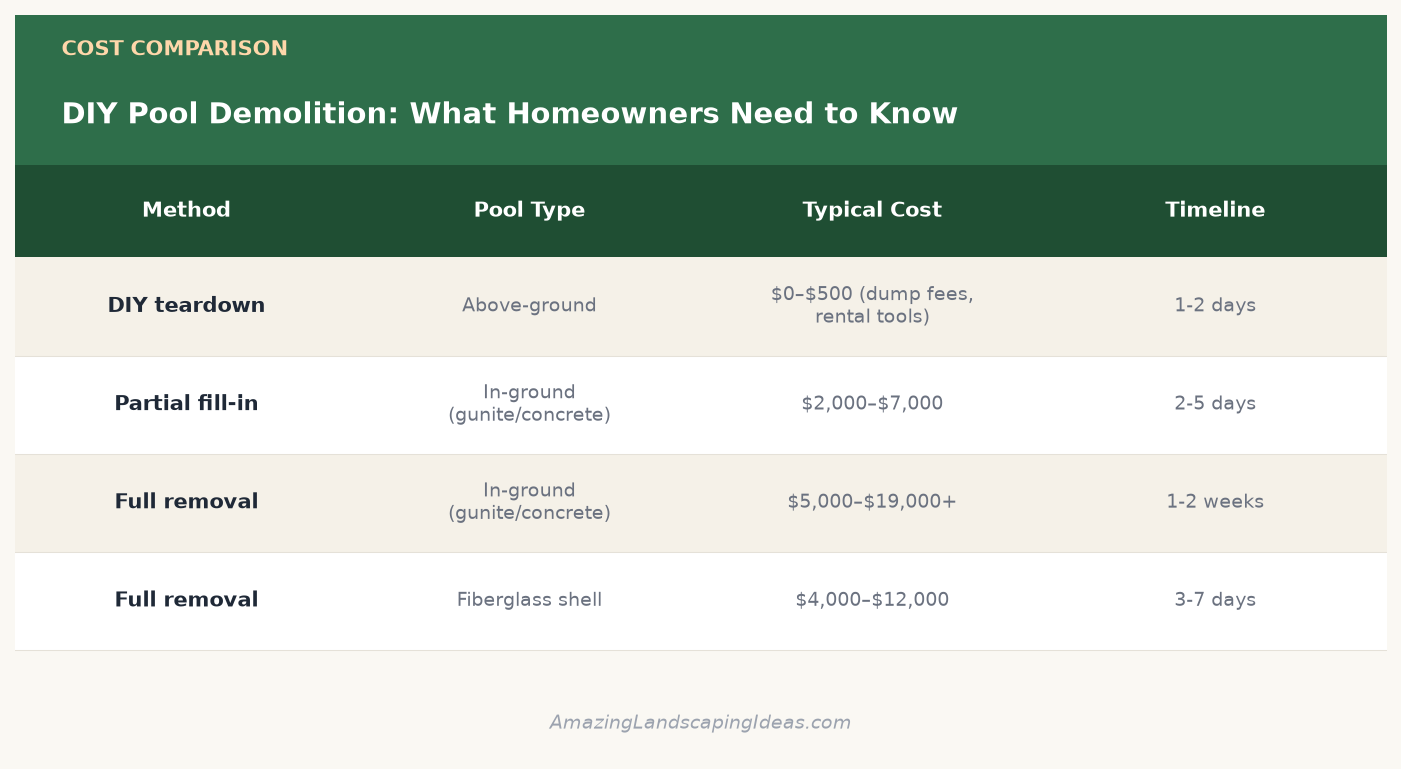
Costs vary by region, pool size, access for equipment, and local disposal fees. The comparison below shows typical pool demolition costs and timelines by method and pool type.
Backfill Material and Post-Demolition Landscaping
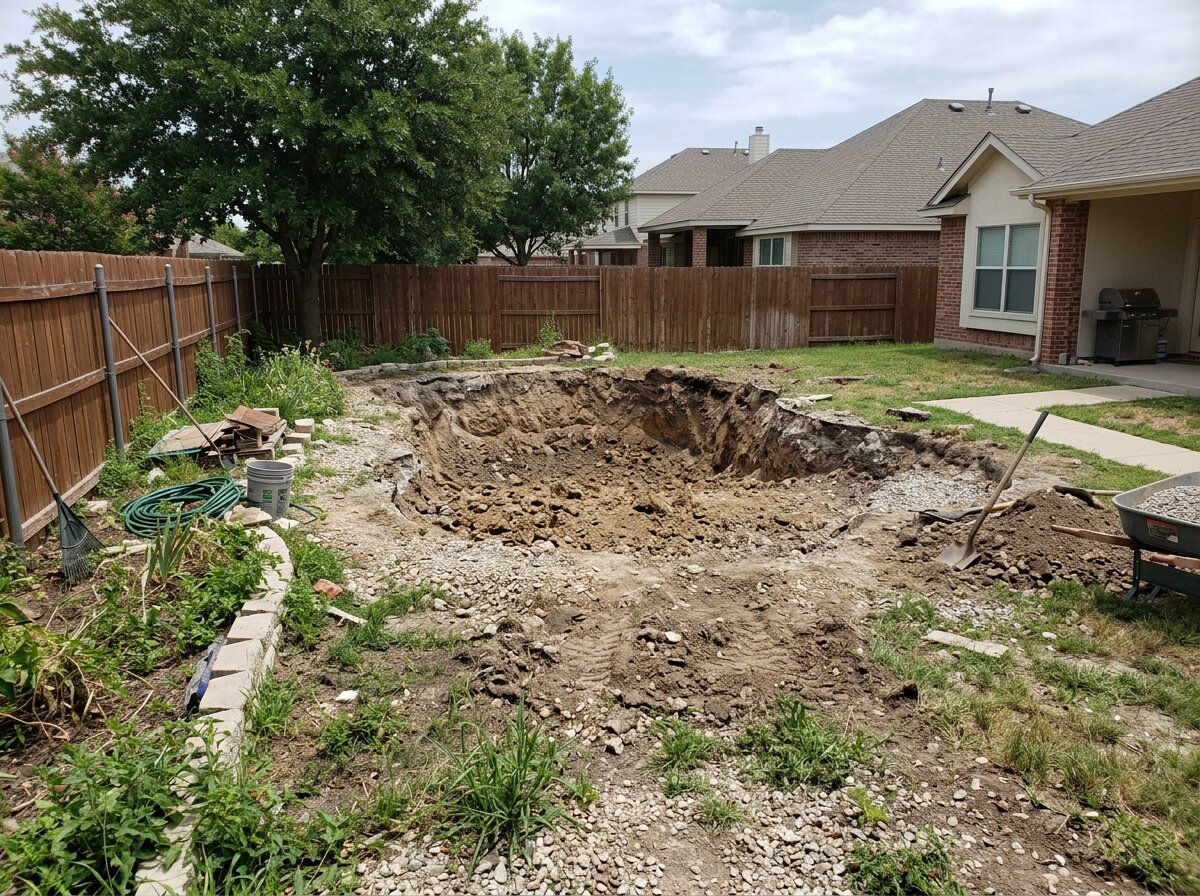
Once a pool is filled or removed, backfill matters. Use clean fill dirt free of construction debris, compacted in 6–8 inch lifts to prevent future settling, then cap with quality topsoil for planting. Popular uses for the reclaimed space include:
- A new patio or fire pit area — see our fire pit pavers guide for material options.
- A sunken garden or raised planting beds.
- Turf lawn extension.
- A smaller, more efficient plunge pool or spa.
Materials & Tools
For above-ground pool DIY removal and site prep, these tools will help:
- DEWALT 20V MAX Cordless Drill/Driver Kit — for disassembling bolted pool frames.
- Sun Joe Electric Submersible Utility Pump — for draining pool water efficiently.
- Fiskars 8 lb Sledgehammer — for breaking apart pool base and liner padding.
- Husky Heavy-Duty Contractor Trash Bags — for liner and debris disposal.
- Scotts Turf Builder Soil Restoration Compost — for restoring compacted soil after removal.
- Craftsman Tow-Behind Lawn Roller — for compacting backfill in the reclaimed space.
When to Call a Pro for Pool Demolition
Bring in a professional demolition or pool removal contractor if:
- You have an in-ground pool of any material (gunite, concrete, fiberglass, vinyl-lined).
- Utility lines — electrical, plumbing, gas — run through or near the pool structure.
- Your yard has a slope, retaining wall, or sits close to your home’s foundation.
- You need permitting, engineering, or inspection sign-off.
- Heavy equipment access is required and you don’t have rental or operating experience.
- You’re unsure about drainage design for backfilling.
Professional demolition crews carry the insurance, equipment, and permitting relationships to complete the job safely and in compliance with local code — often faster and with fewer headaches than a DIY attempt on anything beyond an above-ground pool. When in doubt, a professional pool demolition contractor is the safest route for in-ground removals.
Leave a Reply