Outdoor carpentry projects — decks, pergolas, gazebos, fences, and structural repairs — can dramatically improve your property’s usability and value. But knowing when to tackle these projects yourself and when to hire professional carpentry services is the key to avoiding costly mistakes. As a general rule, simple projects like planter boxes, small benches, and basic deck repairs are DIY-friendly, while anything involving structural load-bearing components, elevated platforms, or complex joinery should be left to a professional carpenter. DIY outdoor carpentry typically costs $200–$1,500 in materials, while hiring carpentry services runs $1,500–$15,000 depending on project complexity. The right decision depends on your skill level, project scope, local building codes, and whether structural integrity is at stake.

Why Outdoor Carpentry Is Different from Indoor Work
Outdoor carpentry faces challenges that indoor projects never encounter: moisture, UV exposure, temperature swings, ground contact, and wind loads. These factors demand specific materials — pressure-treated lumber, cedar, redwood, composite — corrosion-resistant fasteners, and construction techniques that shed water and allow for wood movement. A carpenter who specializes in outdoor work understands these demands. They know which joints hold up to weather, how to flash properly against the house, and how to build structures that meet local building codes for wind and snow loads.
DIY-Friendly Outdoor Carpentry Projects
These projects are approachable for a confident DIYer with basic tools and a weekend to spare.

Raised Garden Beds
Simple box construction using cedar or pressure-treated lumber. No structural load, low risk, and very forgiving of mistakes.
Planter Boxes and Window Boxes
Basic joinery, small dimensions, and minimal code involvement. Great starter projects.
Compost Bins
Slatted construction with no load-bearing requirements. Inexpensive and practical.
Simple Outdoor Benches
Basic frame construction with a seat top. Can be built with a miter saw, drill, and screws.
Privacy Screen Panels
Freestanding or attached slatted screens. Straightforward framing with no structural demands.
Firewood Racks
Simple A-frame or box construction. No permits needed and minimal cutting.
Projects That Typically Require Professional Carpentry Services
Deck Building and Major Deck Repairs
A ground-level platform deck might be within reach of an advanced DIYer, but anything elevated, attached to the house, or requiring footings below frost line demands professional expertise. Decks must support 40–50 pounds per square foot of live load and resist lateral movement. Improper ledger board attachment is a leading cause of deck collapses. Cost range: $4,000–$15,000 for a professional deck build, depending on size and materials.
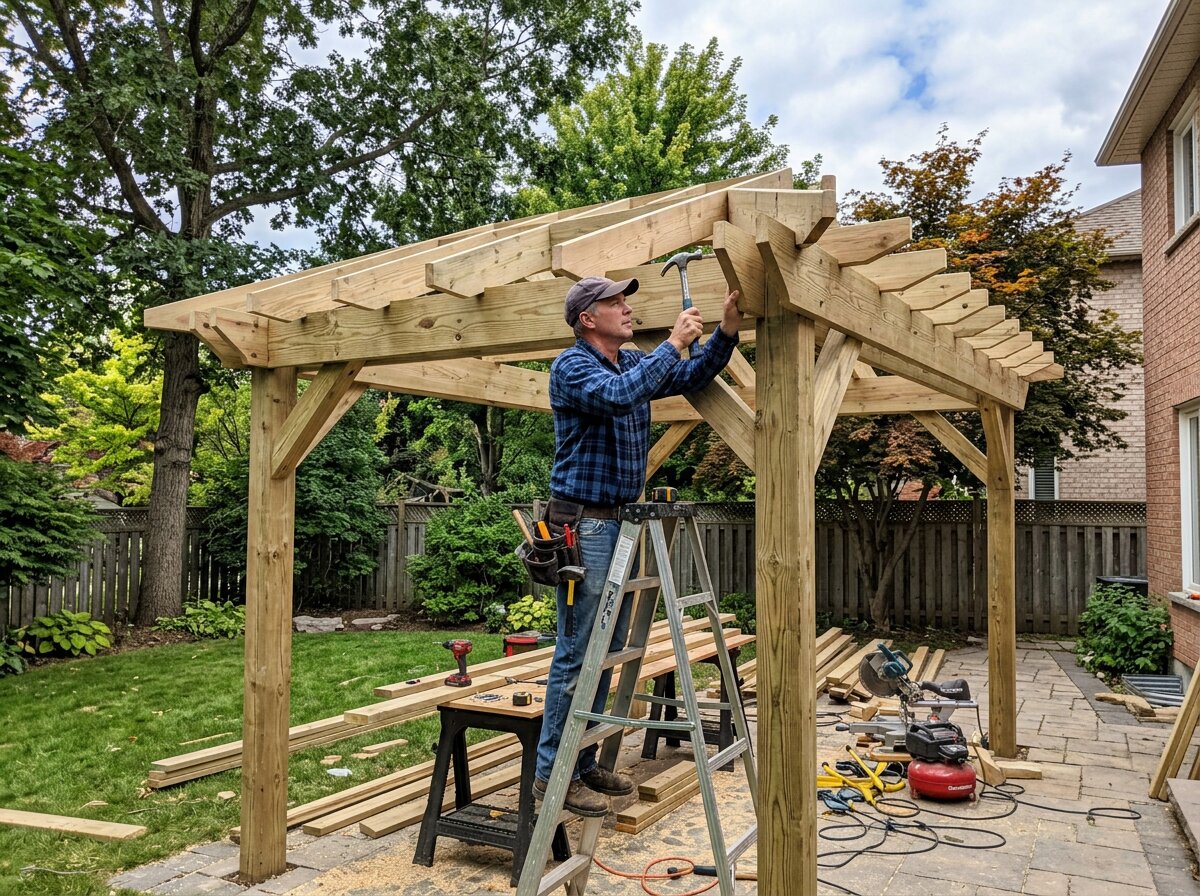
Pergolas and Gazebos
These structures appear simple but require precise joinery, proper anchoring, and often engineered connections for wind resistance. Large spans need beams sized to carry loads without sagging. A professional ensures the structure won’t rack in storms. Cost range: $3,000–$12,000 for pergolas; $5,000–$20,000 for gazebos.
Structural Porch and Stair Repairs
Stairs must meet strict rise/run ratios and load requirements. Porch posts, beams, and joists that show rot need proper sistering or replacement with correctly sized members and appropriate connections. Get this wrong and you risk injury and failed inspections. Cost range: $500–$5,000 depending on scope.
Outdoor Kitchens and Bars
These involve framing, masonry support, counter construction, and integration with utilities. Complex coordination of trades makes this a pro-level project. Cost range: $5,000–$30,000.
Retaining Walls Over 4 Feet
While technically masonry, many carpenters build timber retaining walls. Anything over 4 feet typically requires engineering and permits in most jurisdictions.
Key Factors to Consider Before Deciding
Structural Load and Safety
The single most important question is whether the project carries a structural load or supports people at height. If a failure could cause injury — a deck collapse, a stair giving way, a pergola falling — hire a professional. Decorative and ground-level projects carry far less risk.
Building Codes and Permits
Many outdoor structures require permits and must pass inspection. Decks over 30 inches high, structures attached to the house, and anything with footings usually need a permit. A licensed carpenter knows local code and pulls permits correctly. DIY permit mistakes can force you to tear down completed work.
Your Skill and Tools
Honest self-assessment matters. Do you own a circular saw, drill, level, and square, and know how to use them safely? Do you understand how to keep a structure square and plumb? If the answer is no, the learning curve on a complex project can cost more in wasted materials than hiring out.
Time and Cost Trade-Offs
DIY saves labor cost but takes far longer. A pro crew builds a deck in days; a weekend DIYer might spend a month. Factor in the value of your time, the cost of specialty tools you’d need to buy, and the risk of rework.
How to Hire the Right Carpentry Service
Once you’ve decided to hire out, choosing the right carpenter protects your investment. Follow these steps to find a reliable professional.

- Verify licensing and insurance. Confirm the carpenter carries liability insurance and workers’ compensation, and holds any license your state requires.
- Review a portfolio. Ask for photos of completed outdoor projects similar to yours, and request references you can call.
- Get at least three written estimates. Compare scope, materials, and timelines — not just price. The lowest bid often cuts corners.
- Confirm who pulls permits. A reputable carpenter handles permitting and inspections rather than leaving it to you.
- Get everything in writing. A detailed contract should list materials, milestones, payment schedule, and warranty terms.
- Avoid large upfront payments. A reasonable deposit is 10–30 percent, with the balance tied to progress milestones.
DIY vs. Professional: Quick Cost Comparison
- Raised garden bed: DIY $50–$200 | Pro $300–$800
- Simple bench or planter: DIY $75–$250 | Pro $400–$1,200
- Privacy screen: DIY $150–$500 | Pro $800–$2,500
- Ground-level deck: DIY $1,000–$3,000 | Pro $4,000–$8,000
- Elevated/attached deck: Not recommended DIY | Pro $8,000–$15,000
- Pergola: DIY $600–$2,000 | Pro $3,000–$12,000
- Gazebo: Not recommended DIY | Pro $5,000–$20,000

Frequently Asked Questions
Do I need a permit for a deck or pergola?
In most areas, yes. Decks over 30 inches above grade, structures attached to the house, and anything requiring footings usually need a permit and inspection. Freestanding pergolas may be exempt below a certain size, but always check with your local building department first.
How much do carpentry services cost per hour?
Most carpenters charge $35–$100 per hour depending on region and experience, or a flat project rate. Complex outdoor work with structural requirements typically lands at the higher end.
Can I do part of the work myself to save money?
Sometimes. Many carpenters will let you handle demolition, staining, or cleanup while they do the structural work. Discuss this upfront so it’s reflected in the contract and doesn’t void any warranty.
What’s the most common DIY carpentry mistake outdoors?
Improper fastener choice and ledger board attachment. Using interior screws outdoors leads to rust and failure, and a poorly attached ledger is the top cause of deck collapses. When structure and safety are involved, hire a pro.
Related Reading
If your project involves an existing deck, start with our detailed guide on DIY deck repair for boards, rails, and steps to decide whether a repair or a professional rebuild makes the most sense.
The Bottom Line
Tackle simple, ground-level, non-structural projects yourself to save money and build skills. Hire professional carpentry services whenever load-bearing components, elevated platforms, permits, or safety are involved. Matching the project to the right approach protects your budget, your property, and the people who use these structures every day.
For code specifics before you begin any outdoor carpentry services project, review the International Code Council guidelines and confirm requirements with your local building department. Matching your project to the right professional carpentry services keeps your outdoor build safe, compliant, and durable for years to come.
Leave a Reply